Banff in Winter: What Runs and What Closes in 2026-27
The ski areas' 2026-27 dates, the gondola and the Upper Hot Springs, skating on Lake Louise, the festivals, winter driving and wildlife, and what Johnston Canyon's closure means for the ice walk.
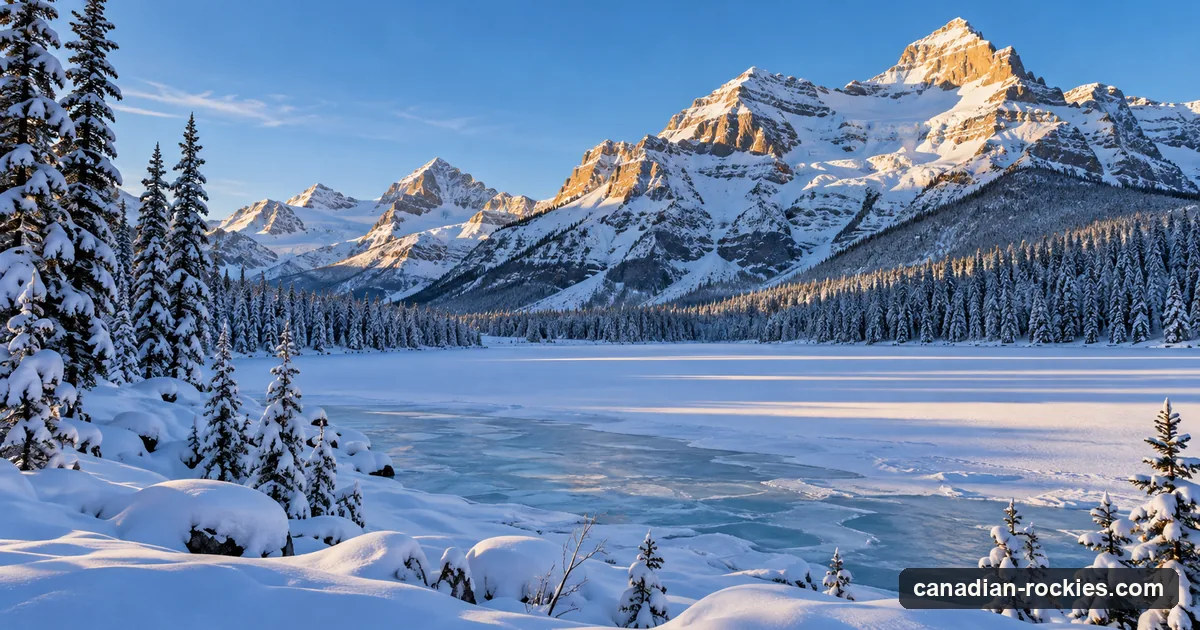
Banff in winter runs from November into spring, and in 2026-27 most of it works as usual. Mt Norquay is due to open on 1 November (a tentative date), Banff Sunshine Village and Lake Louise Ski Resort on 6 November. The Banff Gondola runs all winter apart from 17 to 19 November, the Upper Hot Springs reopen in early November after their autumn maintenance, Banff & Lake Louise Tourism lists skating on Lake Louise from December to March, and the SnowDays festival fills late January and early February. Two things do not work as usual. Moraine Lake cannot be reached at all in winter. And Johnston Canyon, where the winter ice walks go, closes on 13 October 2026 for rock-slope repairs, with no reopening date published.
Johnston Canyon and the ice walk this winter
From 13 October 2026 Parks Canada is closing the trail from the Johnston Canyon parking lot to the Lower Falls and to the lower viewpoint of the Upper Falls, together with the P1 parking lot and washrooms, for “essential rock slope remediation work”. It has published no reopening date. The upper viewpoint of the Upper Falls and the Ink Pots stay reachable on foot by the Moose Meadows trail, and Roam’s Route 9 bus to the canyon is suspended until about 30 November. An ice-walk operator who has guided there since 1994, Gordon Stermann, told CBC: “It will most likely affect our early season ice walks. The ones that run in later November and December.” A second phase of work is planned for September to mid-November 2027, a timeline Bow Valley Insider says is subject to change.
The ice walk is Discover Banff Tours’ “Banff: Morning or Afternoon Johnston Canyon Icewalk”, from US$77 when we checked in October 2026, rated 4.8 from 284 reviews. Pickup is at the bus parking behind the Mount Royal Hotel, 138 Banff Ave, at 8:12 am or 1:12 pm. At the canyon the guide fits ice cleats over your boots and lends you poles. The walk is 5.4 km in all, with 135 m of climbing, along the catwalks to the Lower Falls and up to the frozen Upper Falls, where there is hot chocolate and a maple cookie. Groups are capped at 12 per guide, the minimum age is 8, and children 15 and under need an adult with them. Bring full winter clothing and waterproof boots. Cancellation is free up to 24 hours before. The first date on sale is 1 December 2026, and because the walk uses the stretch of trail that closes on 13 October, check with Discover Banff Tours that it is running before you travel.
If the canyon stays closed, CBC reported that operators were looking at Marble Canyon and Grotto Canyon instead. The Johnston Canyon page has the trail, the Moose Meadows route and the other tours that stop there.
Skiing at Banff and Jasper
Banff has three ski areas: Mt Norquay (1 November 2026 to 18 April 2027, both dates tentative), Banff Sunshine Village and Lake Louise Ski Resort (both from 6 November). Parks Canada says Lake Louise gets more snow than other parts of the park and has “one of the longest ski seasons in North America”. In Jasper, Marmot Basin is targeting 13 November, depending on natural snowfall and temperatures cold enough for snowmaking; children ski and rent free there from opening day to 18 December 2026, the resort says.
Does Lake Louise freeze in winter?
Yes. Parks Canada says Lake Louise and Moraine Lake “usually melt by late May”, and Banff & Lake Louise Tourism lists skating on Lake Louise from December to March. It says the Fairmont Chateau Lake Louise monitors the ice thickness on its rink area, while Parks Canada “does NOT monitor natural ice surfaces” and recommends at least 15 cm of ice for walking or skating alone and 20 cm for skating parties or games. Anywhere else on natural ice, you skate at your own risk.
The lakeshore is open all year, and Roam’s 8X bus runs there from Banff every day (CA$12.50 an adult in 2026; Roam says its fare system changes in November). Moraine Lake is closed by avalanche hazard all winter, and its road becomes an 8.9 km ski trail, track-set with a skating lane, ending at a viewpoint over Consolation Valley and the Ten Peaks. Parks Canada also warns that the hikes to the Lake Agnes and Plain of Six Glaciers teahouses are not safe from November to mid-May because of avalanche hazard.
The Banff Gondola and the Upper Hot Springs
The Banff Gondola climbs to 2,281 m on Sulphur Mountain in about eight minutes and runs all winter except for its maintenance closure, 17 to 19 November 2026. Sky Bistro, the summit restaurant, also closes from 4 to 15 January 2027. The free downtown shuttle ends on 12 October, but the operator says Roam’s Route 1 serves the gondola all year. The ticket is from US$54, rated 4.7 from 4,900 reviews, with no free cancellation and no park pass included; its listing includes the Mountaintop Christmas events until 31 December 2026. The Banff page has its calendar.
The Banff Upper Hot Springs are run by Parks Canada, which calls them “Canada’s highest outdoor pool”. They close from 13 October to early November 2026 for maintenance, then open daily from 10 am to 10 pm, with the water kept at 37 to 40 °C. Admission is sold only in person at reception, with no online tickets; an adult paid CA$19.75 when we checked. Roam’s Route 1 stops there. banff-hot-springs.com goes into visiting the springs in more detail.
SnowDays, Ice Magic and Christmas
SnowDays runs from 21 January to 7 February 2027, with snow sculptures, the free Weekend of Wonder on Bear Street (29 to 31 January) and the free Art of Ice carving competition (5 to 7 February). Ice Magic at Lake Louise (3 to 7 February 2027) is not a public festival: Banff & Lake Louise Tourism describes it as “an exclusive experience for guests of participating Lake Louise hotels and local community members”, with tickets required, although Parks Canada’s Lake Louise page still lists it in January. Christmas in Banff and Lake Louise runs from 12 November to 31 December 2026, and the Hot Chocolate Trail from 12 November to 7 February.
Tours that run in winter
- Stargazing: Banff & Canmore Tours’ “The Banff Stargazing Tour” meets at the Cave and Basin parking lot around sunset for a guided 5 km walk with headlamps. Its listing says it runs in winter as well as summer, with ice cleats when needed, and it is cancelled with a refund in heavy cloud (from US$65, rated 4.9 from 300 reviews).
- Lake Louise and Yoho: Rockies Journey Inc.’s half-day tour from the Banff Train Station visits Lake Louise and, from 13 October to 31 May, swaps Moraine Lake for Emerald Lake and the Natural Bridge (from US$39, rated 4.9 from 693 reviews). Emerald Lake Road is open all year.
Driving in winter
Can I drive to Banff without winter tires?
Parks Canada’s list of roads where snow tires or chains are required by law does not include the Trans-Canada between Calgary and Banff, but its advice is to “ensure your vehicle has snow tires in winter”. The legal requirement covers the Icefields Parkway and Highway 93 South in Banff National Park from 1 November to 31 March, or whenever they are covered in snow or ice, and the Trans-Canada through Yoho and Highway 93 South through Kootenay, in British Columbia, from 1 October to 30 April.
Is the drive from Banff to Jasper scary?
In winter it takes planning. The Icefields Parkway runs 232 km from Lake Louise to Jasper, about three hours without stops by Banff & Lake Louise Tourism’s estimate, and from mid-October to early May there are no services on it: no fuel, food, lodging or cell coverage. Plowing runs from 7 am to 3:30 pm, the 38 major avalanche paths are no-stopping zones, and the road can close for weather and avalanche control; in March 2026 it closed for “extreme avalanche conditions”. Brewster Express has no Jasper service on its winter timetable, which starts on 1 November. Check 511 Alberta before you leave, and see Banff to Jasper. In Jasper, Maligne Canyon stays closed through the winter, ice walks included.
Wildlife in winter
Are there grizzly bears in Banff?
Yes. Parks Canada says the mountain parks are home to both grizzly and black bears and that “you can run into a bear anywhere here”, and it restricts some trails in summer “to protect resident grizzly bears”. Pursuit’s guide to bears in Banff says they are generally out of hibernation from early April through November. Keep 100 m (ten bus lengths) from bears, wolves, cougars and coyotes, and 30 m (three bus lengths) from elk, deer, sheep and moose. Feeding, enticing or disturbing wildlife can bring a fine of up to CA$25,000, and drones are banned.
Have there been bear attacks in Banff?
Yes, though few. Parks Canada’s page on the Lake Minnewanka trail restrictions records five attacks between 1998 and 2005, at Allenby Pass and on the Aylmer Pass trail near the lake, all on hikers alone or in small groups who surprised female grizzlies. In late September 2023 a grizzly killed two backcountry campers in the Red Deer River Valley, which Parks Canada called the first grizzly-caused fatality recorded in Banff National Park in decades.
How many bear attacks per year in Banff?
We found no official yearly count. In 2023 Parks Canada told CBC that “bear attacks are rare occurrences” and that “over the last 10 years, there have been three recorded non-fatal, contact encounters with grizzly bears in Banff National Park”, all of them surprise encounters.
What is the 3 bear rule?
None of the Parks Canada bear pages we read uses the name. The numbers Parks Canada does use are ten bus lengths (100 m) between you and a bear, and groups of four on the trails where it requires them. In a defensive attack, the most common kind, it says to play dead if the bear makes contact; in a predatory attack, which is very rare, fight back.
What’s the coldest month in Banff?
December and January, almost equally. In Environment Canada’s 1991-2020 normals for Banff, December has the lowest daily average (-9.0 °C, against January’s -8.5 °C) and the lowest average high (-4.6 °C), while January has slightly colder nights (-13.5 °C against -13.4 °C). February is milder, with an average high of -0.5 °C. Snowfall runs at about 20 to 25 cm a month from November to March and peaks in April (Banff weather by month).
Is December a good time for Banff?
For skiing and Christmas, yes: the ski areas are open and the Christmas events run to the 31st. The end of the month is busy, though. Parks Canada counts 26 December to 1 January among the busiest days at Lake Louise, and Lonely Planet says accommodation prices go up over Christmas. For the Johnston Canyon ice walk, December is the month most exposed to the closure, so keep the free cancellation in mind and check the operator’s status.
How many days in Banff is enough?
Banff & Lake Louise Tourism says three days covers the highlights, five is ideal for a first visit and a week allows a slower pace. In winter, that is room for ski days, the gondola, the hot springs and an afternoon at Lake Louise. The Banff itinerary sets out one to five days.
Sources: Parks Canada, Environment and Climate Change Canada, Banff & Lake Louise Tourism, Lonely Planet, Roam Transit, CBC, the ski areas and the operators; tour details from each listing. Checked October 2026.
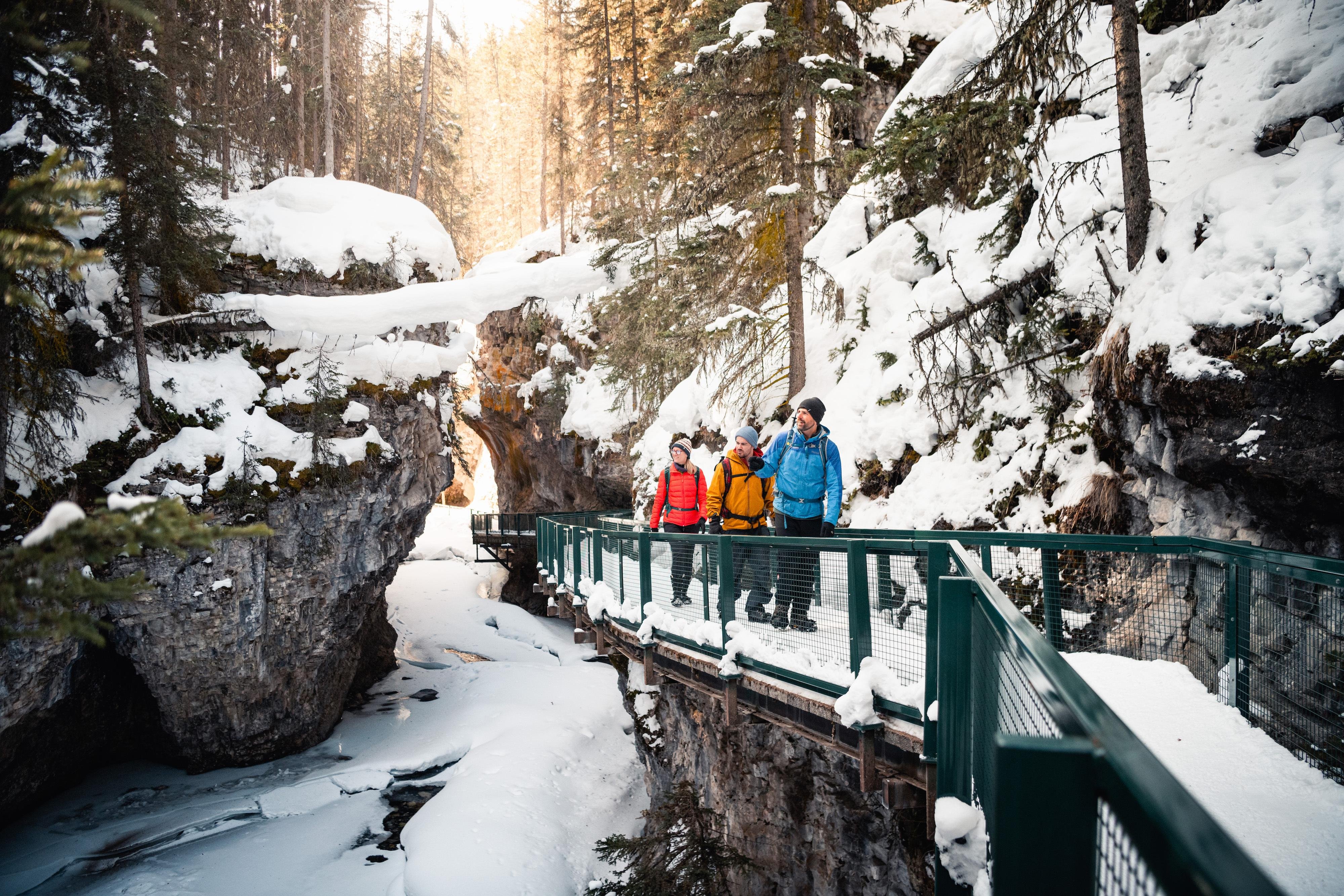
Book the Johnston Canyon Ice Walk
Pickup behind the Mount Royal Hotel at 138 Banff Ave, ice cleats and poles included, 12 guests per guide at most. The first date on sale is 1 December 2026; check the operator's status for the canyon before you travel.
Check Ice Walk Dates